Planning a multi-country safari across East Africa requires careful consideration of routes, timing, and wildlife patterns. This guide draws on insights from experienced safari operators and wildlife experts to help travelers make informed decisions. Learn how to create an efficient itinerary that maximizes wildlife viewing while minimizing travel stress.
- Follow Natural Routes and Allow More Time
Follow Natural Routes and Allow More Time
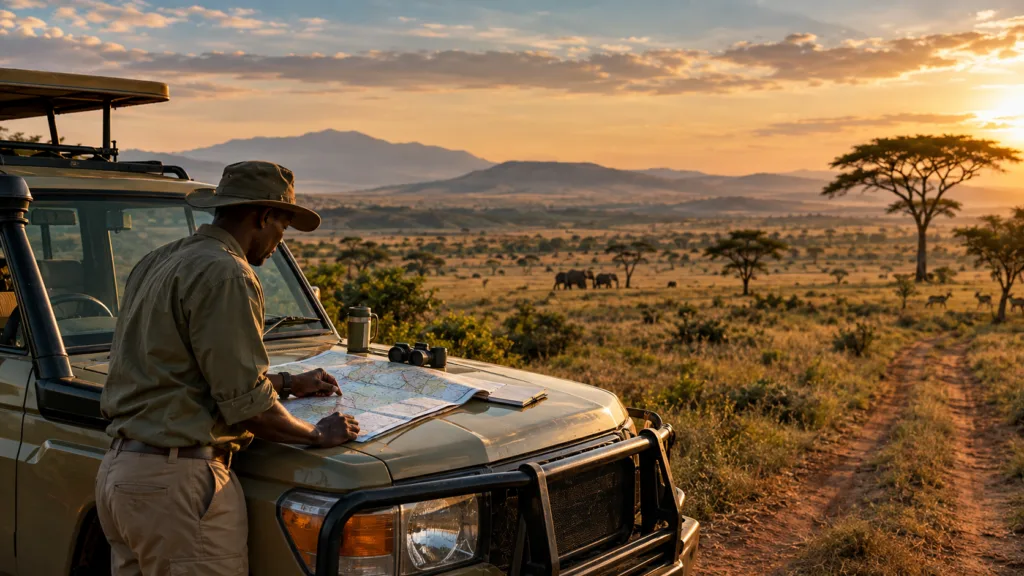
In my experience, the best safari routes follow the natural geography instead of just hopping between well-known parks. In Tanzania, this usually means traveling from Arusha to Tarangire, then Ngorongoro, and finally the Serengeti, moving steadily west and north. In Kenya, a good route might include Samburu, Laikipia, and the Maasai Mara, with a flight for the last long stretch. This way, travelers get to see dry northern landscapes, private conservancies, and open grasslands, rather than visiting similar plains at every stop.
One common mistake is spending just one night in each park. With only one night, you usually get an evening drive and a rushed morning before moving on. I recommend staying two nights in smaller parks and at least three nights in major areas like the Serengeti or Maasai Mara. It’s also important to be realistic about travel days. A six-hour drive is not a safari day, even if you spot some wildlife along the way. Fewer stops usually mean more time for wildlife and a less exhausting trip.
Andres Serra, Travel Expert, Optimise Travel