Ask a high-spending traveler what made their best trip, and the answer is rarely the thread count. It is a guide who read the morning sky and rerouted the whole day, a lodge that already knew how they take their gin and tonic, or an hour at a sighting with no one hurrying them along.
Luxury travel in 2026 is moving away from five-star suites, visible extravagance, and bucket-list itineraries. In their place are personalization, privacy, flexibility, and a deeper connection to people and place. The best execution is the kind guests never notice: transfers that connect, contingency plans that absorb a delay before anyone feels it, and one person who owns the handoffs.
East Africa shows this shift clearly. Its value lies in wildlife, landscapes, and communities that no resort can replicate, and reaching them well takes logistical mastery and local judgment. This matters even more as AI planning tools get better at building routes.
To understand what travelers now expect, we asked advisors, operators, guides, and travel writers how they define modern luxury. Most speak from East Africa, and a few add comparative views from Egypt, Morocco, and Baja California. They covered why personalization outweighs an expensive room, what separates seamless execution from poor coordination, and why local expertise still matters. Here is what they told us.
- Luxury Travel Prioritizes Seamless Human Connection
- Luxury Travelers Seek Unrepeatable Human Moments
- Invisible Planning Defines Premium Safari Travel
- Modern Luxury Creates Space for Connection
- Luxury Shifts Toward Privacy, Access, and Time
- Luxury Travel Makes Personal Possibilities Real
- Local Expertise Unlocks Africa’s True Luxury
- High-Spend Travelers Pay for Human Certainty
- Flawless Personalization Defines Luxury in 2026
- Luxury Travel Centers on the Gift of Attention
1. Luxury Travel Prioritizes Seamless Human Connection
Modern luxury in 2026 is defined by the elimination of cognitive load rather than the accumulation of physical amenities. For the high-spending traveler, the expectation has shifted from visible extravagance to invisible coordination, where the most impactful personalization is predictive rather than reactive. It is the difference between a hotel asking for preferences upon arrival and a lodge having a guest’s preferred camera lens settings and specific dietary requirements ready because they meticulously tracked interests across previous touchpoints. Personalization outweighs the value of expensive rooms because luxury is now measured in time and privacy.
While a five-star suite has become a commodity, a seamless transition between an international flight and a remote bush landing-where every staff member knows a traveler’s specific conservation interests without a single redundant question-remains a rare, premium service. This requires a sophisticated blend of data management and human empathy. Technology provides logistical continuity, but local experts provide the cultural context that an algorithm cannot replicate. AI planning lacks the behavioral nuance required for high-stakes travel; it can suggest a route through East Africa, but it cannot account for the real-time relationship between a guide and a specific ecosystem or the subtle shifts in local community dynamics.
The point of failure in modern travel is rarely the technology itself, but the lack of human ownership during the handoff. While AI might optimize an itinerary, a human expert ensures the spirit of the journey remains intact when plans change. Destinations like Africa are uniquely suited for this new era of experiential luxury because they demand a level of logistical mastery and genuine human connection that simply cannot be automated.
Pratik Singh Raguwanshi, Manager, Digital Experience, CXrove
 Pratik Singh Raguwanshi
2. Luxury Travelers Seek Unrepeatable Human Moments
I’m Runbo Li, co-founder and CEO of Magic Hour, an AI video platform used by millions of creators and small businesses. I spend my life at the intersection of technology and human experience, and that lens shapes how I see every industry, including luxury travel.
The biggest shift in luxury travel is the same shift happening everywhere else: people are paying for outcomes, not inputs. Nobody cares about thread count anymore. They care about whether the experience was designed around them or around a brochure. That’s the whole game now.
I saw this firsthand when a friend, a former tech executive, came back from a two-week East Africa trip last year. She didn’t talk about the lodge. She talked about a Maasai guide who rerouted their entire day because he read animal behavior that morning and predicted a river crossing nobody else saw. That moment, unrepeatable and unscriptable, was worth more to her than any infinity pool. She said it was the single best day of her life. That’s what high-spending travelers are chasing now. Not luxury as a noun. Luxury as a feeling of “this could only happen to me, here, today.”
This is also why local expertise isn’t going anywhere, even as AI gets better at trip planning. AI can build you an itinerary. It can surface lodges, optimize routes, compare prices. What it cannot do is read the sky at 5 AM and decide to skip the planned game drive because the light and wind mean the wildebeest are moving east. That judgment lives in a person who has walked that land for decades. AI is a spectacular co-pilot for research and logistics. But the final mile of premium experience is still deeply human.
The execution piece is where most trips fall apart. I think of it like software deployment. The plan can be perfect, but if the handoffs between flights, transfers, guides, and lodges have any friction, the whole thing collapses. The best operators in East Africa treat coordination the way we treat product reliability. Every transition is tested. Every contingency is mapped. The traveler never sees the complexity. They just feel seamless.
Africa suits this new definition of luxury because it forces presence. You can’t scroll your phone during a leopard sighting. The environment demands you be exactly where you are. And that, ironically, is the most scarce commodity for the people who can afford anything. Not a bigger suite. Just an hour where the world shrinks to exactly what’s in front of them.
 Runbo Li
3. Invisible Planning Defines Premium Safari Travel
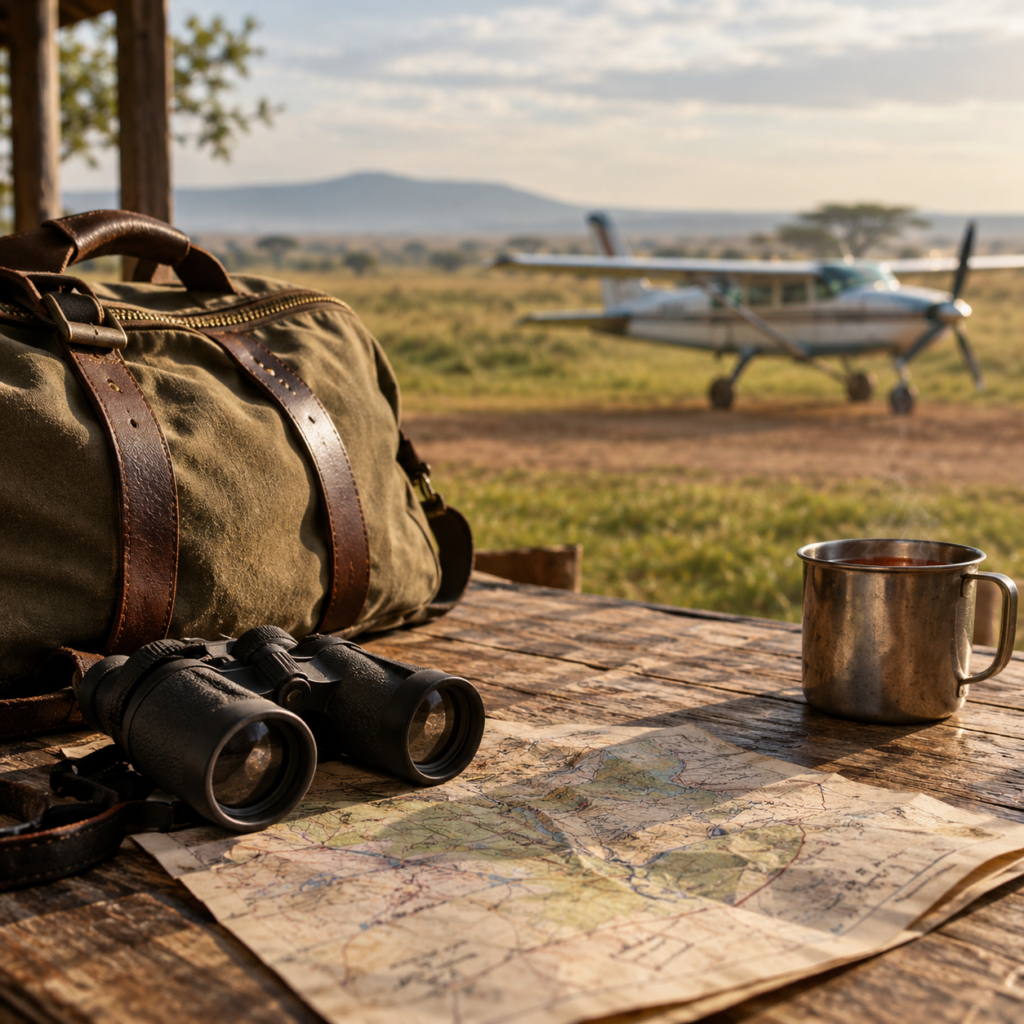
AI can quickly map out a route through Nairobi, the Maasai Mara, Serengeti, and Uganda. But it does not always know if flight times connect well, if a border crossing is practical that day, or if a suitcase will fit on the safari plane. For instance, Safarilink allows only 15 kilograms of baggage per passenger on many routes, including hand luggage, and prefers soft bags. If a planner only learns this after guests arrive with hard cases and 25 kilograms each, the trip will not feel premium.
A well-planned trip means every part of the journey fits smoothly with the next. International arrivals should allow enough time for immigration and the transfer to the domestic airport. The lodge needs to know about food preferences before guests arrive. The driver must have the right airstrip, not just the park name. I also prepare backup plans for delays, lost luggage, and missed connections. Travelers might not notice this work, and that is intentional. In 2026, true luxury often means guests never feel like anything is being made up as they go.
 Andres Serra
4. Modern Luxury Creates Space for Connection
I think one of the greatest luxuries in travel today is the freedom to slow down, feel heard and genuinely connect with a place.
Beautiful lodges, privacy and exceptional service still matter. But if every day is packed from morning until evening, you have simply recreated the pressure of everyday life in a more beautiful setting. Personalisation starts by asking not only what travellers want to see, but how they want to experience it.
I was recently planning a Kenya visit for friends arriving in December and January. They wanted to visit a Maasai community, so I asked whether they preferred a short, conventional village visit or more time to meet people, talk and understand a little more about everyday life. They immediately chose the latter.
That reminded me that modern luxury is not always about adding another activity. Sometimes it is about giving one experience enough time to mean something.
I also believe cultural connection should not turn communities into living museums. Maasai life is diverse and evolving. Where local hosts genuinely welcome it, I would rather see travellers spend time with Maasai women, learn about beadwork, share conversations and hear their perspectives directly. These experiences should be shaped with the women themselves, with fair compensation and genuine choice over what they share.
At Sidai Trails Safaris & Retreats, this is something we are trying to build more intentionally into our journeys. We are also exploring longer-term community partnerships around Amboseli linked to women’s livelihoods, water access and education. These are plans in development, not completed projects. The principle is simple: tourism should create value for the people hosting travellers, not only a meaningful moment for the visitor.
Local expertise is another part of luxury that matters more, not less, in the age of AI. AI can suggest hotels and build an attractive route, but it cannot replace relationships on the ground, realistic travel times, the right guide for a particular traveller, or knowing when an itinerary simply needs more space.
Good execution is almost invisible. Guests should not have to worry about transfers, timing or what happens when plans change. Someone should already be handling it.
To me, modern luxury is not necessarily doing more or spending more. It is feeling understood, having room to breathe and coming home with a deeper connection to the place you visited.
 Edina Gaspar
5. Luxury Shifts Toward Privacy, Access, and Time
I run a tour operator in Egypt, not East Africa, so I can’t speak to safari lodges or conservation. I can speak to the same shifts from the Egyptian side, and I’ll leave East Africa specifics to your other sources.
What luxury means now: for the high-spending travelers we see, it has moved from visible extravagance toward privacy, access and control over their time.
Why personalization beats an expensive room: guests spend most of each day out of the room. A trip built around what they actually care about (a specific period of history, a slower pace, a family with young children) gets remembered longer than a better hotel.
Why local expertise still matters in the age of AI planning: guests increasingly arrive having researched with AI, and it helps with practical questions. What it can’t do is explain why a site matters while you’re standing in it, or adjust the day when something changes, like a road closure, heat or a tired child. That judgment comes from a guide who works there every week.
What separates premium execution from poor coordination: premium is mostly invisible. The driver tracks the flight and is there when the guest comes out, the guide knows the entry times and the quiet hour, and the schedule has slack built in. Poor coordination shows up as waiting, rushing and repeated questions about who is responsible for what.
Why Africa suits experiential luxury: much of the value is in places and traditions that can’t be copied. Sailing a wind-powered Dahabiya on the Nile or camping in the White Desert gives you something no resort can offer.
 ALAA TOLBA
6. Luxury Travel Makes Personal Possibilities Real
I think luxury travel has become much less about visible extravagance. People still appreciate an incredible lodge, expensive tasting/looking food, and a high level of comfort, but increasingly the real luxury is access, time, privacy, and an experience that feels genuinely personal.
Working in luxury wildlife travel, I’ve seen how different that can look from one guest to another. Some people will happily spend hours waiting for a particular wildlife encounter or photograph, while others want to explore as much as possible. Personalisation comes from understanding what somebody actually cares about and having the flexibility to plan around that.
I saw this particularly clearly when I co-led a marine wildlife expedition in Baja California. We were travelling by yacht through the Sea of Cortez and, although we had a plan, wildlife and weather dictated a lot of our days. We changed routes, adapted activities, and at times split the group depending on what people wanted to do. We had six guests ranging from 14 to 74, so there was never going to be one version of the trip that worked perfectly for everyone.
I use AI myself and think it’s an incredibly useful planning tool, but I don’t think it replaces local expertise. There’s a difference between having information about a destination and having experienced it first-hand. When you’re actually out there, you’re relying on people who understand the wildlife and the conditions, and who can make a judgement based on what’s happening that day.
There’s also so much that happens behind the scenes on a trip like this. Plans change, weather happens and logistics don’t always go perfectly. If it’s being handled well, the guest shouldn’t have to worry about any of that.
Africa tends to lend itself particularly well to this kind of travel. You can stay in an extraordinary lodge, but so much of the experience exists outside of it. It could just be having enough time at a sighting rather than rushing on, travelling with a guide who really knows the area, or getting an insight into conservation work that you wouldn’t have access to travelling independently.
I think that’s where luxury travel is moving. It’s still about a high level of service, but it’s becoming much more about what can be made possible for you.
 Eve Warner
7. Local Expertise Unlocks Africa’s True Luxury
From what we see organising private tours in Morocco, luxury today is less about the room and more about the moment.
The best example is a night in a Sahara desert camp. Most camps are simple: a tent, a carpet, a shared dinner of tagine around the fire. They are not luxurious in the classic sense. But after dinner the generator goes quiet, the lights go off, and the sky fills with more stars than most of our guests have ever seen — the Milky Way from one horizon to the other, so bright it throws shadows on the sand. People lie on the dunes in silence for an hour. That is the luxury: not the bed, but a sky you cannot buy anywhere else. Many guests tell us it was the best night of their trip.
Personalization beats expensive rooms. A couple who loves food will remember baking bread with a family in an Atlas village longer than an extra star on the hotel. A family with young children values short drives and a pool in the afternoon more than a famous palace hotel three hours away. The best trips start with questions, not with a fixed itinerary.
Local expertise still matters in the age of AI planning. An app can list the medina of Fes; it cannot introduce you to a craftsman who has worked in the same workshop for decades, or know that a road is closed after rain, or which camp is far enough from the others to keep the sky truly dark.
Premium execution is everything the guest doesn’t see: drivers who know the timing of each road, a guide who reads the group’s energy, a plan B for weather, and one contact who answers at any hour.
That is why Africa suits experiential luxury: its greatest value is in landscapes, silence and people — and the way to reach them is through the locals who live there.
 Moha Boni
8. High-Spend Travelers Pay for Human Certainty
From the London end, the clearest change in high-spend travel is that people pay for certainty and a real person, not just a better seat. We book long-haul flights from the UK to Australia, South-East Asia and India, and every customer gets a real person on WhatsApp from first quote to the flight home.
Personalisation now means honest choices. We track Christmas Business-class fares from London every few hours. A London–Sydney Business return (out 15–20 Dec, back 4–8 Jan) is about £6,100–£6,300 per person on UK comparison sites, roughly £25,000 for a family of four. Moving dates by a day or two can change that by hundreds of pounds each, and Kuala Lumpur or Phuket for the same holiday is about £3,150–£3,300 in Business. Setting those options out clearly is worth more to a family than a pricier room.
AI tools help with searching, but people still want a human to judge the dates, the route and what to do when plans change. That judgement is the premium.
 Aman Thakran
9. Flawless Personalization Defines Luxury in 2026
Luxury in 2026 is defined less by status and more by time, privacy, personalization, and the absence of friction. In East Africa, that means exclusive-use camps in private conservancies where travelers can enjoy extraordinary wildlife encounters without crowds, moving entirely at their own pace. The accommodation matters, but the true luxury is freedom.
Personalization outperforms even the finest accommodations because the experience adapts to the traveler, not the reverse. A family might combine gorilla trekking in Rwanda with a private migration camp in Tanzania, with daily plans evolving around wildlife movements, weather, and individual interests.
The most meaningful cultural and conservation experiences are authentic rather than staged. Time spent alongside local rangers or community initiatives creates genuine connection, allowing travelers to leave with context, understanding, and a tangible contribution.
While AI can suggest itineraries, local expertise remains irreplaceable. Experienced guides understand wildlife behavior, seasonal conditions, and community relationships, transforming a good trip into an exceptional one. Their judgment prevents logistical challenges and unlocks experiences technology alone cannot replicate.
True luxury is often invisible: seamless transfers, private charters, personalized service, and contingency plans that absorb disruptions before guests notice them. The distinction lies not in more amenities, but in flawless execution.
These same expectations shape luxury living. As Founder of Le Comble, the global platform for ultra-luxury branded residences, I work with internationally mobile families seeking the same blend of privacy, personalization, and effortless service in the places they call home. Branded residences combine private ownership with the service standards of leading luxury brands, delivering hotel-caliber amenities, dedicated concierge support, and five-star management while preserving the privacy of a private residence. The result is a seamless lifestyle that reflects the evolving definition of modern luxury, whether for a week on safari or a lifetime of ownership.
 Reginald Bouzy
10. Luxury Travel Centers on the Gift of Attention
Luxury has moved from what a guest possesses to what a guest experiences and feels. A traveler at the top of the market can still buy the suite, the car and the wine. What they increasingly cannot buy anywhere else in their life is an hour in which a capable person is fully present for them. That is the scarce resource now, and the properties and guides who deliver it are the ones the trend reports hold up as the future of the category.
Africa suits this better than almost anywhere because the setting strips luxury back to the people. When I interviewed Graham Ledger, who built Singita’s lodges across South Africa, Zimbabwe and Tanzania, the example he gave was small. If a guest regularly orders a gin and tonic, the lodge adds it to their drink box for the guide to share on the game drive, or sets up a surprise gin bar at the bush dinner in the boma. The data point is ordinary. What makes it luxury is the specificity: the same note in a city hotel would call for a different gesture. That is the difference between personalization and an expensive room.
It is also why local expertise survives the age of AI planning. Software can assemble an itinerary. It cannot read a guest’s face at breakfast and change the day. The guide who knows which ridge the light hits at six and which guest would rather sit with the trackers than photograph the lions is doing something no system does. Ledger hires for exactly that: eighty percent enthusiasm and cultural fit, twenty percent technical skill, followed by an induction that runs up to three weeks at a wilderness lodge, where a less rigorous operator would cut it to days.
Premium execution versus poor coordination comes down to the same discipline. Expensive programming without noticing produces activity. Attention produces the experience the guest came for, and the operators who deliver it consistently, to every guest, on an ordinary Tuesday, are the ones whose conservation work, from Singita’s land in southern Africa to the lodges built around it, reads as conviction rather than marketing.
Rahim B. Kanani, author of The Luxury of Attention: What the World’s Greatest Hoteliers and Chefs Know About Leadership
 Rahim B. Kanani
What This Means for Travelers
Across ten very different voices, the same ideas kept coming back. For anyone planning a high-end trip, four takeaways stand out:
- Look for time and privacy, not just amenities. A beautiful suite is now a given. What sets a trip apart is control over your own schedule, access to places without crowds, and room to stay with a sighting or a conversation as long as you like.
- Judge an operator by what you don’t see. Connecting flights, the right airstrip, luggage that fits the bush plane, and a backup plan for delays are the marks of good coordination. When it works, you never notice it. Ask who owns each handoff and who answers when plans change.
- Use AI to research and people to decide. AI tools can draft a route and compare options. Guides and planners with years on the ground read the weather, the wildlife, and the group, and adjust the day as it unfolds.
- Give each experience enough time to mean something. Whether it is a community visit, a conservation project, or a night under the stars, one unhurried experience beats three rushed ones. The best cultural encounters are shaped with the people hosting them and benefit them fairly.
The common thread is attention. Luxury now means someone has thought about you, planned around you, and stayed out of your way while you enjoy it.
 Compiled by